

Every year, tens of thousands of sports-related eye injuries are treated in emergency rooms across the country, and the majority of them are preventable.
Sports rank among the leading causes of eye injuries in both children and adults. The damage ranges from minor corneal abrasions to serious blunt trauma that can permanently alter your vision.
Basketball causes more eye injuries than any other sport in the United States, followed closely by baseball, racquet sports, and contact sports like football and martial arts. What makes these injuries particularly concerning is how fast they happen. A finger to the eye during a rebound, a ball traveling at high speed, or an elbow thrown wide during a scramble can each do real damage in an instant.
April is Sports Eye Safety Month, which makes it a good time to think honestly about what’s putting your eyes at risk every time you step onto the field, court, or track.
What Types of Eye Injuries Actually Happen During Sports?
Not every sports eye injury looks dramatic. Some athletes walk off the field not realizing anything serious has occurred, while others sustain damage that shows up days or weeks later. Knowing what to watch for starts with understanding what these injuries actually look like.
Surface Injuries
Corneal abrasions are the most common sports-related eye injury. A scratch to the cornea from a fingernail, turf, or flying debris can cause sharp pain, tearing, and light sensitivity. While many abrasions heal within a few days, some require evaluation to rule out infection or more serious damage.
Blunt Trauma
A direct blow to the eye from a ball or elbow can cause a hyphema, which is bleeding in the space between the cornea and iris. It looks alarming and is. Blunt trauma can also fracture the orbital bones surrounding the eye or cause a retinal detachment, both of which require urgent care.
Even injuries that seem to resolve on their own can create long-term problems. Blunt trauma to the eye is a known risk factor for traumatic glaucoma, a condition where elevated pressure silently damages the optic nerve over time.
Who Needs Protective Eyewear?
The short answer is anyone who plays sports, but the type of protection matters as much as wearing it at all.
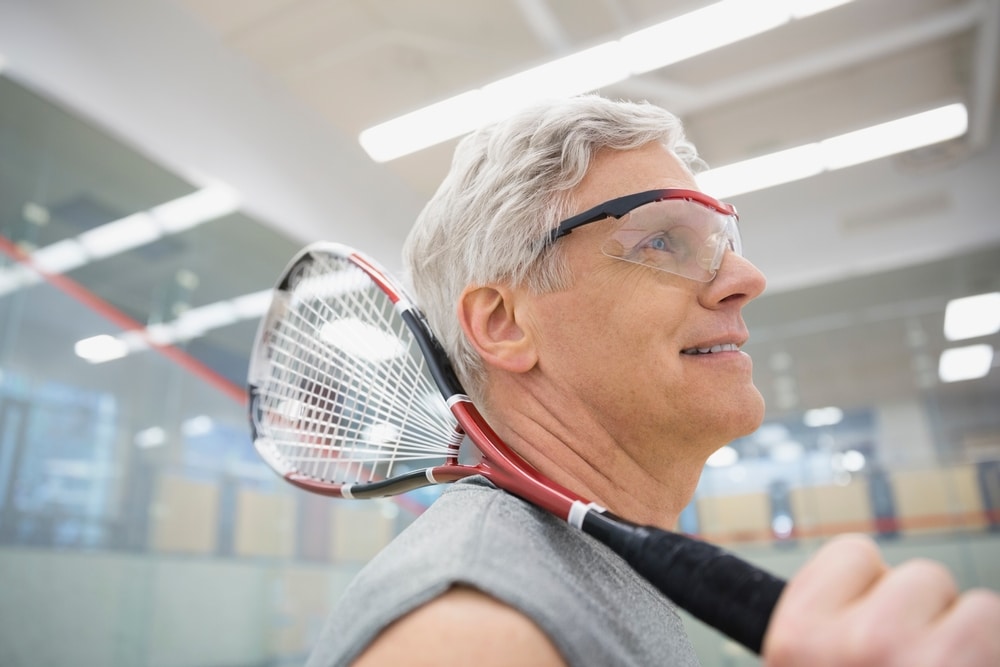
Regular prescription glasses are not protective eyewear. Standard frames and lenses can shatter on impact and actually increase injury risk. Sunglasses, even wraparound styles, are similarly inadequate for sports. The standard for genuine protection is polycarbonate lenses inside ASTM-certified sports frames or goggles. Polycarbonate is impact-resistant and significantly reduces the force that reaches the eye during contact.
For patients who need vision correction, prescription sports eyewear is widely available and can be fitted specifically for your sport and activity level. Athletes who wear contact lenses should know that contacts provide zero impact protection. They can shift, tear, or trap debris against the cornea during contact sports, which creates its own set of problems. Contacts are fine to wear alongside proper protective eyewear, but they are not a substitute for it.
When to See an Eye Doctor After a Sports Injury
Some eye injuries are obvious. Others are not. These symptoms after any impact to the eye or face warrant prompt evaluation through a comprehensive eye exam:
- Sudden vision changes, blurring, or loss of vision in any part of your visual field
- Floaters, flashes of light, or a shadow or curtain across your vision
- Eye pain that persists beyond a few minutes
- Redness, swelling, or visible bleeding in or around the eye
- Sensitivity to light that is out of proportion to the injury
A retinal detachment, in particular, can present with floaters and flashes before vision loss begins. Catching it early can make the difference between full recovery and permanent damage.
Did a sports injury affect your eye, or are you overdue for a comprehensive eye exam? Schedule an appointment at All Eye Care, P.A. in Waxahachie, TX.