

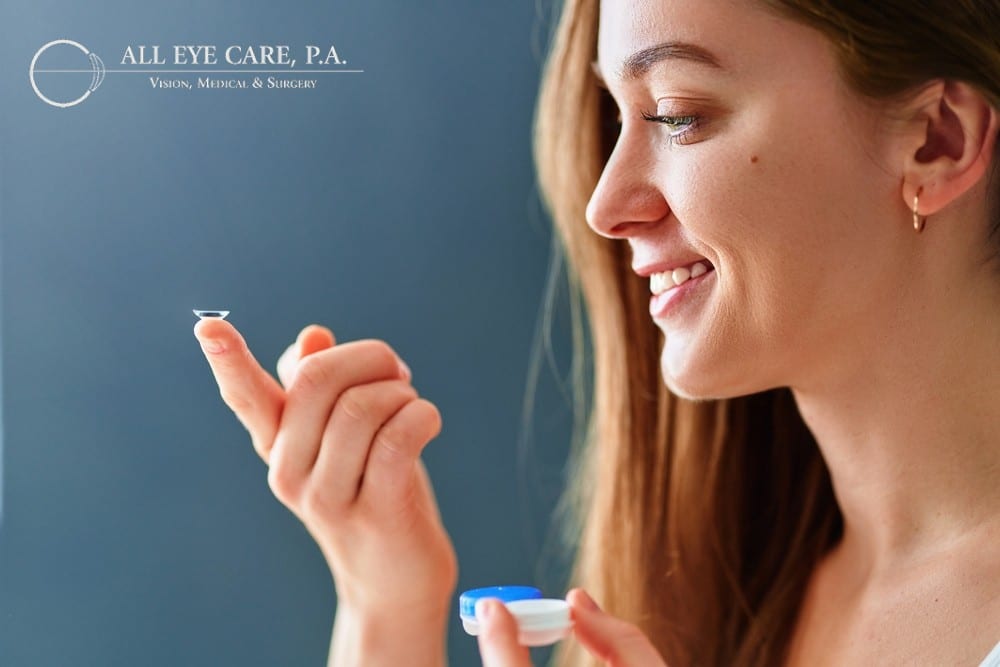
Contact lenses are one of the safest forms of vision correction available when they’re cared for properly. When they’re not, they become one of the more common sources of preventable eye infections. The difference almost always comes down to daily habits!
Keep reading to learn how to properly care for your contact lenses to maintain your clear, healthy vision.
Why Proper Care Matters
Contact lenses sit directly on the eye’s surface. That proximity is what makes them so effective and what allows them to introduce bacteria, reduce oxygen flow to the cornea, or cause microscopic abrasions if used incorrectly. Conditions like bacterial keratitis can develop quickly and, in serious cases, lead to permanent scarring. The cornea has no blood vessels to fight infection the way other tissues do, so it’s slower to recover. However, most of these problems are preventable with consistent habits.
Building Your Daily Routine
Good contact lens care comes down to a handful of small habits, repeated every single day. None of them are complicated, but skipping any one of them is where most problems start.
Start With Clean Hands
Wash your hands every time you insert or remove your lenses. Use a mild, non-scented soap, rinse thoroughly, and dry with a lint-free towel, as fabric fibers can cling to lenses and end up on your eye. Lotion-based soaps leave residue that transfers to the lens, so save those for after you’ve handled your contacts.
Use the Solution the Right Way
Always use the contact lens solution recommended by your eye doctor.
Rinsing lenses with tap water is one of the most common mistakes wearers make. Tap water, even filtered, can contain microorganisms like Acanthamoeba that cause severe corneal infections.
Never “top off” old solution by adding fresh solution on top. Empty the case completely, rinse it with fresh solution (not water), and leave it open to air dry between uses. Replace the case every three months, or immediately if it becomes damaged.
Stick to Your Replacement Schedule
If your lenses are monthly disposables, replace them at the end of the month. Proteins and deposits build up on lens surfaces over time, even when you can’t see or feel them. Wearing lenses past their scheduled date raises infection risk and reduces oxygen to the cornea.
Daily disposables are the simplest option from a care standpoint: one lens per day, no cleaning, no case to maintain. If keeping up with a routine is a struggle, switching to dailies often solves the problem. A contact lens fitting with Dr. Ruby Rodriguez at All Eye Care, PA can help you find the right match for your lifestyle.
Habits That Put Your Eyes at Risk
Sleeping in lenses is one of the most frequent causes of serious lens-related eye problems. Closed eyes reduce oxygen to the cornea, and wearing a lens on top of that significantly raises the risk of infection and corneal swelling. Unless your lenses are approved for overnight wear, take them out before bed.
Swimming or showering with contacts in is another habit worth dropping. Lakes, pools, and tap water can harbor pathogens that are harmless on skin but hazardous when trapped between a lens and your cornea. If your contacts get wet, remove and discard them as soon as possible.
Overwearing matters too. Most people can wear soft contacts comfortably for 10 to 14 hours, but pushing past that regularly can dry out the ocular surface. If your eyes feel irritated by afternoon, a different lens material or rewetting drops may help.
When to See Your Eye Doctor
Annual comprehensive exams are especially important for contact lens wearers. Prescriptions shift, and your doctor also needs to check the health of your cornea. Contact lens wear can cause subtle changes over time that you’d never notice on your own. At All Eye Care, P.A., Dr. Rodriguez provides thorough assessments that help identify problems before they progress.
Remove your lenses and call your doctor right away if redness doesn’t clear, discharge, light sensitivity, persistent blurry vision, or eye pain occurs. When in doubt, a quick check beats treating an infection.
Are your contacts comfortable and your prescription still accurate? Schedule an appointment at All Eye Care, P.A. in Waxahachie, TX, and let Ruby Rodriguez, OD make sure your lenses are working for you.